How do you play 16x16 Sudoku?
16×16 sudoku — usually called Super Sudoku or Hexadoku — is classic sudoku scaled up: a 16×16 grid divided into sixteen 4×4 boxes, filled with sixteen symbols so that each symbol appears exactly once in every row, every column and every box. The symbol set varies by publisher — commonly the numbers 1–16, or the sixteen hexadecimal digits 0–F (which is where "Hexadoku" comes from) — but the symbols are just labels; the logic is identical either way.
Nothing about the rules is new. What's new is the scale: 256 cells instead of 81, sixteen candidates per empty cell instead of nine, and a solve that becomes a proper session rather than a coffee break. This guide covers the names, the rules, honest time expectations, and the strategy adjustments that keep a grid this size manageable.
What is 16x16 sudoku called?
The variant has no single official name, so you'll meet several — all describing the same puzzle:
- Super Sudoku — the most common English label in puzzle books and apps.
- Hexadoku — the name used when the grid is filled with the hexadecimal digits 0–F; popularized by the electronics magazine Elektor, which has run a monthly Hexadoku for years.
- Sudoku 16×16 or 16×16 Giant Sudoku — the plain descriptive names.
- Monster sudoku — an occasional catch-all for any oversized grid, including 16×16 and 25×25.
Whatever the label, check the box size: a true 16×16 uses 4×4 boxes, so every unit — row, column, box — holds exactly sixteen cells.
The rules
Take the classic rulebook and swap every "nine" for "sixteen":
- each row contains all sixteen symbols exactly once,
- each column contains all sixteen symbols exactly once,
- each 4×4 box contains all sixteen symbols exactly once.
The symbol set is cosmetic. 1–16 is friendliest for newcomers; 0–F keeps every cell to a single character, which matters on paper where two-digit numbers get cramped; some books use the letters A–P. Whichever set you're handed, you're never doing arithmetic — you're placing sixteen distinct labels, exactly as you place nine in classic.
One practical difference from classic deserves flagging up front: an error costs far more here. A wrong digit in a 9×9 usually surfaces within a few moves; in a 16×16 it can hide for half an hour of consequences. Verify placements as you make them — unwinding a deep mistake in a grid this size is the single most demoralizing thing in the variant.
How much longer does it take?
Considerably — and more than the cell count suggests. The grid has roughly three times the cells of a 9×9 (256 vs. 81), but each deduction also runs over units of sixteen instead of nine, so scanning, candidate lists and eliminations all take longer per cell too. In practice a 16×16 doesn't take three times as long as a comparable 9×9 — it takes a good deal more, and an easy Super Sudoku will comfortably outlast a hard classic.
That's not a defect; it's the appeal. This is the variant for solvers who reach the end of a Diabolic 9×9 wishing it kept going. Treat it like a long-form puzzle: expect a session (or several), and solve it somewhere your progress is safe. On paper that means guarding the sheet; in an app it means saved progress makes multi-sitting solves painless.
Strategy adjustments for the big grid
Every classic technique carries over unchanged — singles, pairs, box-line reduction, and on hard puzzles fish patterns and chains. What changes is which habits dominate:
- Scanning is heavier, so structure it. Cross-hatching one symbol across sixteen boxes is a real task. Sweep symbol by symbol in a fixed order, and focus on rows, columns and boxes that are already well filled — a unit with twelve of sixteen placed will hand you placements that a half-empty unit never will.
- Pencil-mark discipline matters more than any technique. With up to sixteen candidates per cell, "I'll keep it in my head" stops working entirely. Write candidates where they're few, not everywhere: marking every possibility in a fresh grid buries the signal. Many strong solvers only pencil cells down to four or five candidates.
- Hidden singles outperform naked singles. Waiting for a cell to eliminate down to one candidate out of sixteen takes ages; asking "where in this row can the 12 still go?" pays out much sooner. Make the hidden-single sweep your default motion.
- Work neighborhoods, then rotate. Progress clusters: a few placements in one band of boxes enable more nearby. Push a productive area while it's warm, and when it cools, move on and come back — grinding a stalled corner of a 256-cell grid burns time.
Who 16x16 sudoku is for
Be honest with yourself here, because the variant is polarizing. 16×16 is for solvers who want more puzzle — more endurance, more bookkeeping, longer arcs of deduction — rather than harder logic. If what you crave is deeper technique, a Diabolic 9×9 or a hard Killer will challenge you more per minute. If what you crave is a puzzle you can sink into for an evening the way you'd sink into a jigsaw of a thousand pieces, 16×16 is exactly that, and the moment the last symbol drops after a long solve is genuinely satisfying in a way a five-minute grid can't match.
It's also a natural next step once classic pacing feels too short — and a gentler commitment than the five-grid samurai format, since it's one continuous grid with no cross-grid bookkeeping.
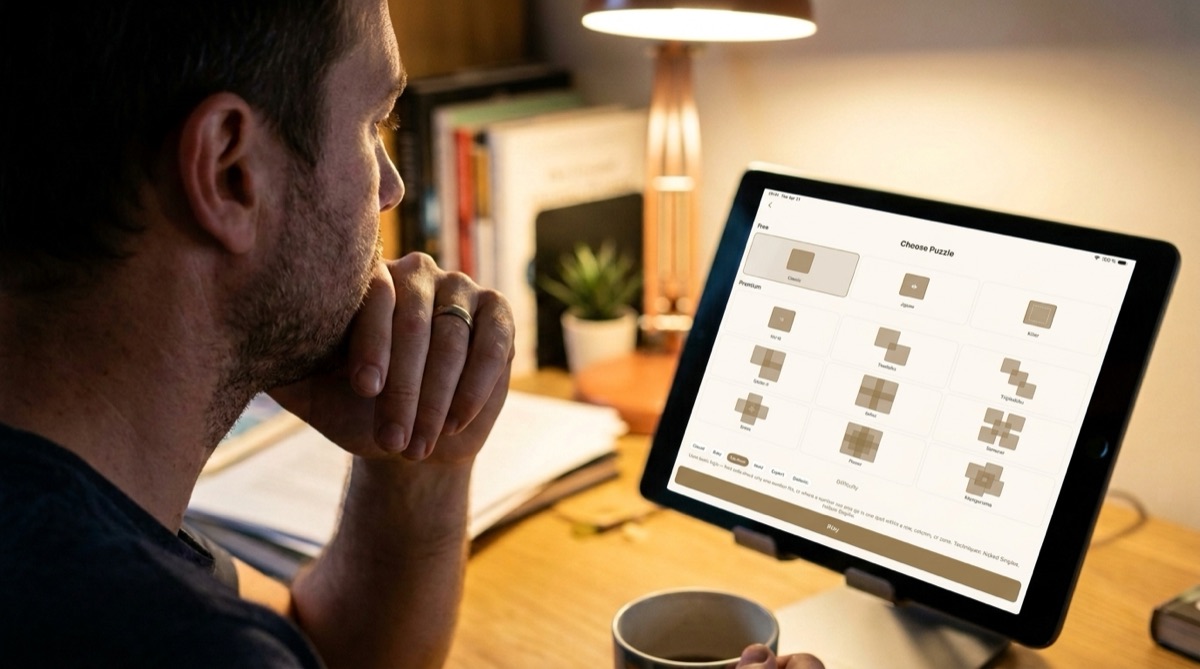
How to play 16x16 Sudoku in Sudoku by Joseph
- Install the app
Download Sudoku by Joseph for iPhone, iPad or Android. The download is free and includes Classic, Jigsaw and Killer sudoku.
- Unlock premium
16×16 is one of the nine premium variants (alongside Samurai and the multi-grid family). Premium comes with a 7-day trial and also removes ads; pricing varies by country — see the App Store.
- Choose 16x16 and a difficulty
Pick 16×16 from the variant chooser and any difficulty from Easy to Diabolic — every level is open from the start, with no level map. Easy is the right on-ramp even for strong classic solvers; the scale alone is an adjustment.
- Solve across as many sittings as you like
Progress is saved automatically, pencil marks are unlimited, hints are on request, and there is no mistake counter or timer pressure — a big grid can span your whole week if you want it to.
Practical 16x16 tips
- Start in the most-filled band of boxes, not the emptiest — density is where the early placements live on a grid this size.
- Sweep for hidden singles symbol by symbol in a fixed order (1 through 16, or 0 through F) so you never lose track of which symbols you've already scanned.
- Pencil-mark selectively: mark cells that are down to a handful of candidates and leave wide-open cells blank. A fully annotated 16×16 is unreadable.
- Double-check each placement against its row, column and box before moving on. In this variant, thirty seconds of verification beats thirty minutes of unwinding.
Other options worth knowing
Honest alternatives: if you solve on paper, Elektor magazine's monthly Hexadoku is the classic 0–F fix, and 16×16 puzzle books are plentiful. Online, sudoku-puzzles.net has free 16×16 grids to play in the browser or print. Both app stores carry dedicated 16×16 apps as well, though many are single-purpose and ad-heavy. Where Sudoku by Joseph differs is that 16×16 lives alongside eleven other variants in one native app — unlimited puzzles, Easy to Diabolic, saved progress, offline play, and no lives or coins anywhere.
Frequently asked questions
What is 16x16 sudoku called?
Most often Super Sudoku or Hexadoku — the latter specifically when the grid uses the hexadecimal digits 0–F. You'll also see it listed plainly as Sudoku 16×16, or lumped under "monster sudoku" with other oversized grids. All names refer to the same rules.
Does 16x16 sudoku use numbers or letters?
It varies by publisher: 1–16, the hex digits 0–F, or letters A–P are all common. It makes no difference to the solving — the sixteen symbols are just labels, and there is never any arithmetic involved.
Is 16x16 sudoku harder than regular sudoku, or just longer?
Mostly longer. The logic toolkit is identical, but with 256 cells and sixteen candidates per unit, scanning and bookkeeping take real effort and errors are costlier to unwind. An easy 16×16 will usually take longer than a hard 9×9 without requiring deeper technique.
Is 16x16 Sudoku free in Sudoku by Joseph?
16×16 is a premium variant. The free, ad-supported download includes Classic, Jigsaw and Killer; premium unlocks 16×16 plus the multi-grid family and removes ads, with a 7-day trial. Pricing varies by country — see the App Store.
16x16 Sudoku is included in premium
12 variants, a Daily Challenge with streaks — and never any lives, coins or energy bars. The download is free.