Which sudoku apps actually have no ads?
Very few sudoku apps have no ads at all — and "ad-free" on a store page can mean four completely different things. The genuinely ad-free options are paid-upfront apps like Good Sudoku on iOS, free browser sites like sudoku.coach, and the paid tiers of otherwise ad-supported apps. Everything else — including some apps with "No Ads" in their name — deserves a closer look.
Full disclosure before anything else: we make Sudoku by Joseph, and our free tier shows ads too. This guide is not going to pretend otherwise. Instead it maps out who shows what, when, and how to check an app's real model before you install it.
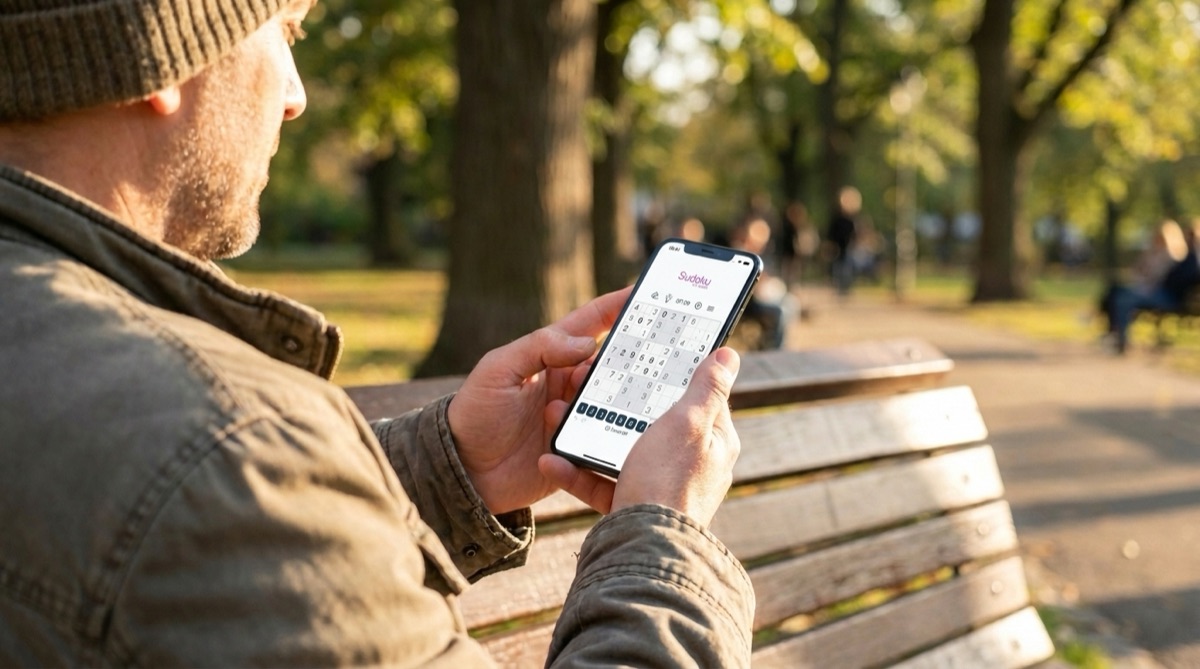
The four kinds of "ad-free" — a field guide
When you search for sudoku without ads, the results mix four different business models under one label. Knowing which one you're looking at tells you most of what you need.
1. Paid upfront, genuinely zero ads
You buy the app once, and there is simply no ad code in it. Good Sudoku by Zach Gage (iOS, one-time purchase) is the best-known example: no ads, no in-app currency, and an unusually good teaching system on top. The trade-off is obvious and fair — you pay before you know whether you like it, and you typically get classic sudoku rather than a stable of variants. If "no ads, period" is your only requirement and you're on iPhone, this category is the clean answer.
2. Free with ads, paid ad removal
This is most of the big names, including the apps at the top of every store chart. The download is free, ads fund the free tier, and a purchase removes them. Nothing wrong with the model in principle — it's how ours works too — but read the fine print on what you get for the purchase. Some large publishers charge a recurring monthly subscription whose only benefit is removing the ads: same puzzles, same features, you're paying rent on the absence of interruptions. Others bundle ad removal with actual content. Same store label ("contains ads, offers in-app purchases"), very different deals.
3. "No Ads" as an app name
Search any app store for "sudoku no ads" and you'll find apps with that exact phrase in their name. That's not a coincidence — naming an app after a search query is a store-optimization tactic, and it works precisely because so many people are fleeing ads. Some of these apps are honest paid apps; others still contain in-app purchases or show "house ads" for the developer's other titles. The name is a marketing claim, not a certification. Check the in-app purchase list on the store page before believing it.
4. The browser option
sudoku.coach is a free website with no ads and a genuinely excellent technique trainer. If you're happy solving in a browser tab and don't need a native app, offline play, or variants beyond its scope, it's hard to argue with — it costs nothing and interrupts nothing. The honest caveat: it's a website, so the experience depends on your connection and browser, and it isn't built around a phone-first, tap-anywhere-anytime routine the way a native app is.
The interruption test: when ads appear matters more than whether they exist
Here's the distinction most "ad-free" discussions miss. Ads differ enormously in how much they cost you:
- A banner or an interstitial between puzzles is a tax on your time. Mildly annoying, but your solving is intact — the puzzle you're thinking about is never touched.
- Mistake-triggered ads are a different animal. In apps with a lives system, your third wrong digit locks the board mid-puzzle, and the way out is watching a video ad (or paying). The ad isn't beside the game; the game has been engineered to produce the ad. Your concentration — the entire point of sudoku — is the raw material.
This is why a simple "has ads / no ads" checkbox misleads. An app that shows a banner but never touches your board mid-puzzle is a fundamentally better experience than one that gates your mistakes behind video ads — even though both technically "have ads." If you're choosing between imperfect free options, ask where the ads live, not just whether they exist. We wrote a whole guide on the lives mechanic and what it does to your solving: sudoku apps without lives or mistake limits.
Where Sudoku by Joseph honestly fits
Plainly: the free tier of Sudoku by Joseph is ad-supported. Category 2, no asterisks. If you install the free version, you will see ads.
What we can honestly claim is the interruption test above. There are no lives, no mistake counters, no energy bars, and no coin shop anywhere in the app — free tier included. A wrong digit never locks your board, never triggers a video, never costs you anything. Ads exist around the free experience; they are never wired into your solving.
The second difference is what the one subscription buys. It removes all ads and unlocks nine additional variants (Samurai, 16x16, and the multi-grid family among them) on top of the free Classic, Jigsaw and Killer — rather than being a recurring fee whose only deliverable is the absence of ads. There's a 7-day trial, and pricing varies by country, so check the store listing rather than taking numbers from a blog post (including this one — we deliberately don't print prices here because they go stale and differ by region).
Is that the right deal for you? Genuinely depends. If you only ever play classic 9x9 and want zero ads with zero recurring cost, a one-time-purchase app like Good Sudoku is arguably the better buy, and sudoku.coach is the better free one. If you want variants, offline play on your phone, and a free tier that never interrupts a puzzle in progress, that's the case we're making.
How to evaluate an "ad-free" claim before installing
- Scan the store screenshots for lives or hearts
A row of hearts, a mistake counter ("2/3"), or an energy bar in the screenshots tells you the app has interruption mechanics — which almost always means mistake-triggered ads or purchases in the free tier, whatever the description says.
- Read the in-app purchase list on the store page
Both app stores list purchase names and types before you install. Consumables like "coins" or "hints pack" signal a token economy. An app named "No Ads" that lists in-app purchases deserves your skepticism.
- Check whether "Remove Ads" is a standalone purchase — and whether it recurs
If ad removal is its own line item, note whether it's a one-time purchase or a subscription. A recurring subscription whose only benefit is removing ads means you're renting silence; decide if that's a deal you're happy with.
- Skim recent reviews for "ad after every" and "mistake"
Store reviews are where the real ad cadence shows up. Search the reviews for words like "ads" and "mistakes" — if players report ads firing mid-puzzle or after errors, you've found a category-2 app wearing category-1 clothes.
Other options worth knowing
This page is about one question — ads. If you're choosing an app overall, the trade-offs are wider than that: teaching quality, variants, offline play, and the lives mechanic all matter. We wrote an honest head-to-head of the main iPhone options — including the ones we lose to — here: what's the best sudoku app for iPhone?
Frequently asked questions
Is Sudoku by Joseph ad-free?
No — the free tier shows ads. What it never has, free or paid, is lives, mistake limits, coins or energy: no ad is ever triggered by your solving. The premium subscription removes all ads and unlocks all 12 variants; there's a 7-day trial, and pricing varies by country.
Are apps named "Sudoku No Ads" really ad-free?
Sometimes. The name is a store-search tactic, not a guarantee — some are honest paid apps, others still carry in-app purchases or promote the developer's other apps. Check the in-app purchase list on the store page and skim recent reviews before trusting the name.
Why do some sudoku apps charge a monthly subscription just to remove ads?
Because it works: recurring revenue from a feature that costs nothing to deliver. There's no technical reason ad removal needs to recur — plenty of apps sell it once. If a subscription's only listed benefit is "no ads," you're paying rent on an absence; whether that's acceptable is your call, but it's worth noticing.
Is there a sudoku option that is both completely free and completely ad-free?
In the browser, yes: sudoku.coach is free with no ads and includes a strong technique trainer. Among native apps, "free forever and ad-free forever" essentially doesn't exist at quality — development gets funded by ads, a purchase, or a subscription. Pick which of the three you prefer.
The free tier has ads — the puzzle never does
12 variants, a Daily Challenge with streaks — and never any lives, coins or energy bars. The download is free.